KIOS
a Cajal Bodies houseCajal Bodies

KIOS, a Cajal Bodies house

Old plates, printed to order.

KIOS is a made-to-order label from the Cajal Bodies studio in Tanjung Bira, South Sulawesi. Each chapter is drawn with one partner from the coast, laid out like a plate from an old natural-history book, and printed on cloth in water-based ink.

We sell in drops. A chapter opens for pre-order with a ship-by date we promise, then closes and goes to print. The partner's own community gets the first 48 hours. Edition numbers follow the order in which pieces are ordered, and we ship worldwide.

Before KIOS

The archive

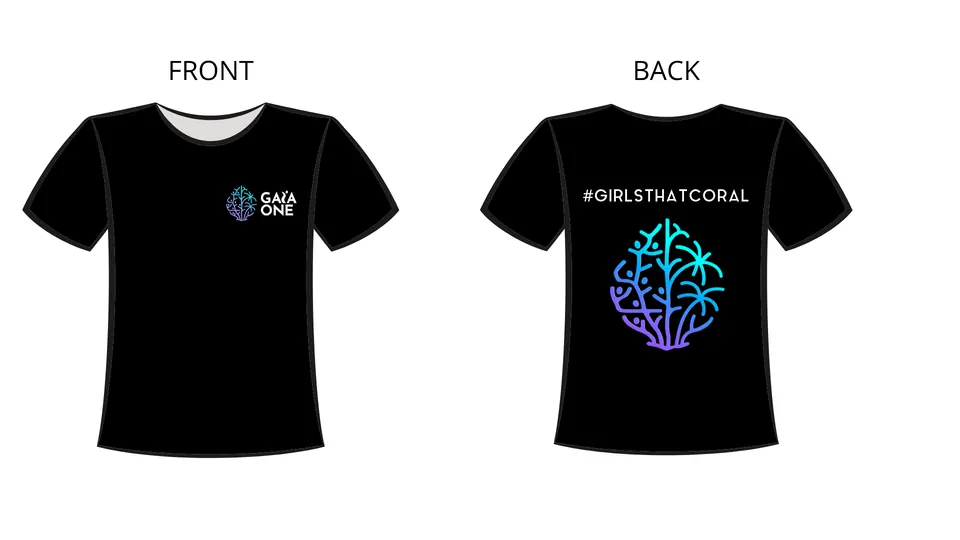
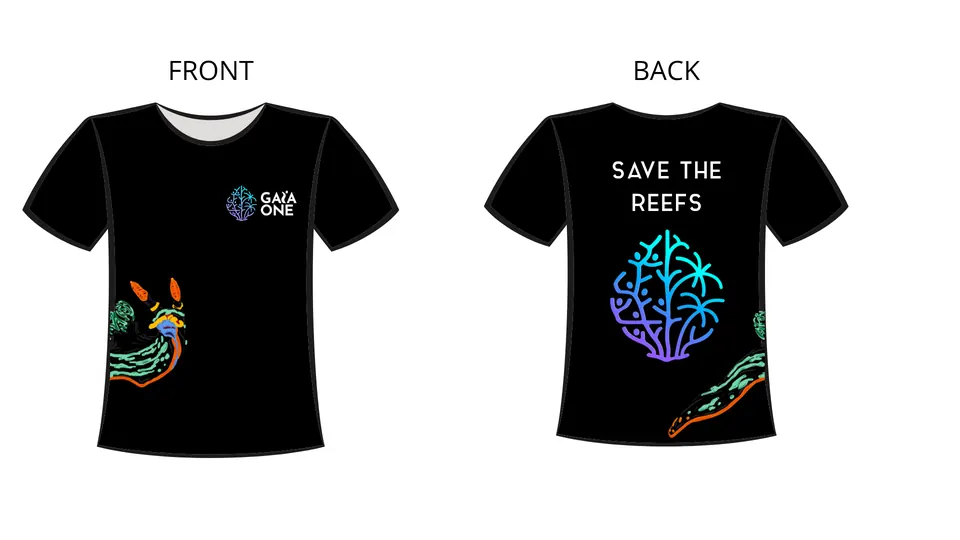
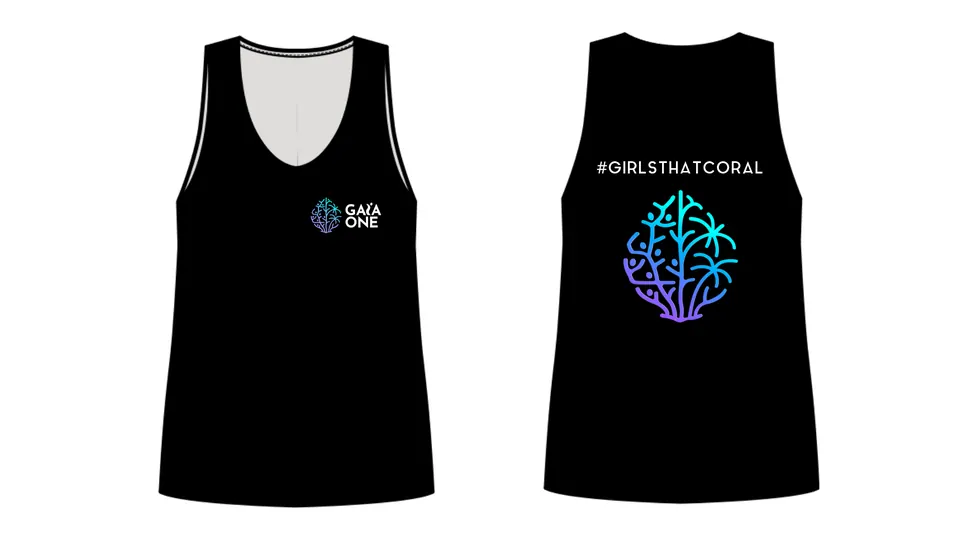
Before there was a label, GaiaOne made its own shirts. Black tees and tanks with the emblem on the chest and a line on the back, a royal blue tee for Tevana House Reef, and one tee taken down to the reef. These are the 2022 designs, kept here as they were. KIOS starts where they left off.

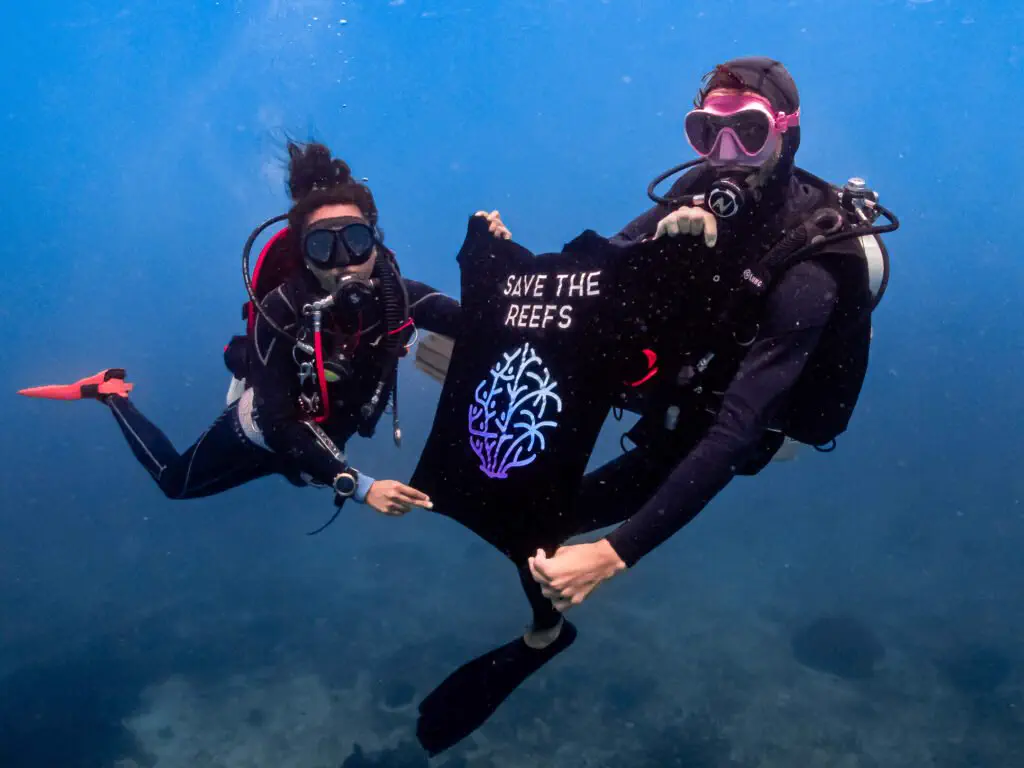
Two divers underwater holding up a black GaiaOne tee printed with Save The Reefs and the coral emblem
Save The Reefs, the GaiaOne tee, underwater. Photo from GaiaOne.
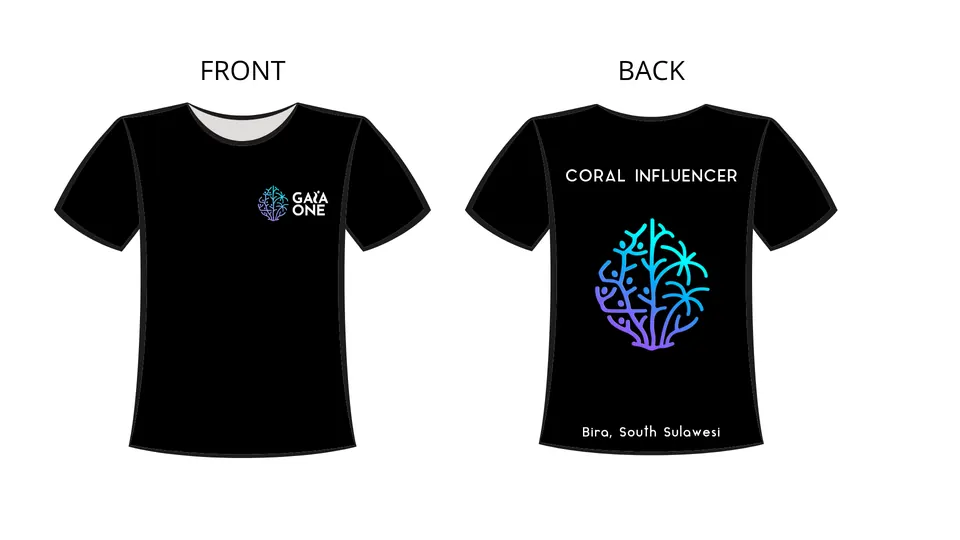
  • Black tee, front with the GaiaOne emblem on the chest, back reading Coral Influencer above the coral emblem and Bira, South Sulawesi
    Coral Influencer, Bira, South Sulawesi. Front and back.
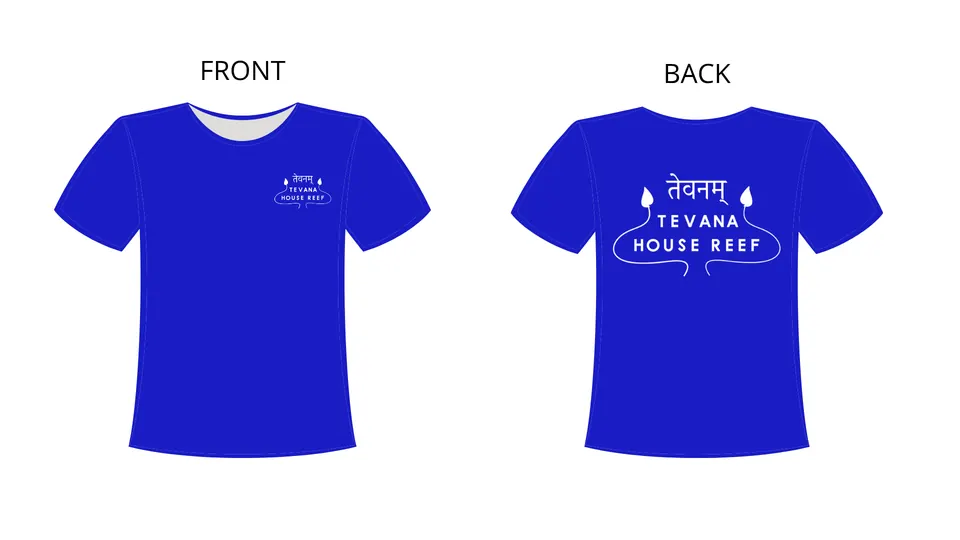
  • Royal blue tee with the Tevana House Reef mark on the back
    Tevana House Reef, royal blue.
  • Black tee reading #GirlsThatCoral on the back above the coral emblem
    #GirlsThatCoral.
  • Black tee with a colourful sea creature drawn at the hem and Save The Reefs on the back
    A sea creature at the hem.
  • Black tank top with the coral emblem and #GirlsThatCoral on the back
    The tank, front and back.
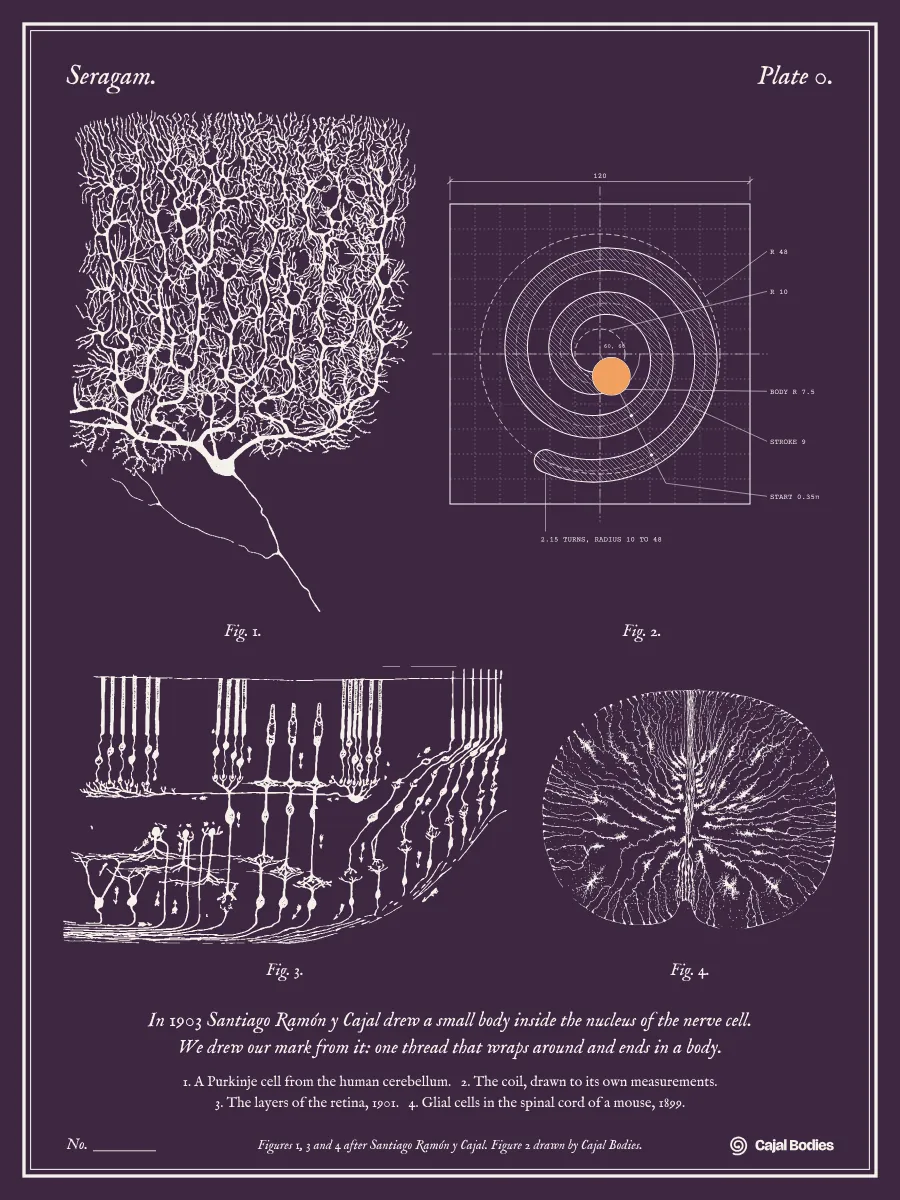
Plate 0: three nerve cells drawn by Santiago Ramón y Cajal beside the Cajal Bodies coil, drawn to its measurements
Plate 0. Figures 1, 3 and 4 after Santiago Ramón y Cajal, 1899 to 1901. The coil drawn by Cajal Bodies.

Chapter 00

Seragam

KIOSCajal Bodies

Seragam means uniform. This is what the studio wears to work in Bira: a plum work shirt with our coil on the pocket, a chalk bucket hat for the sun, and Plate 0, where the coil sits beside nerve cells drawn by Santiago Ramón y Cajal.

In 1903 Cajal drew a small body inside the nucleus of the nerve cell. It was later named after him, and we took our name and our mark from it.

Drop opening soonGet early access
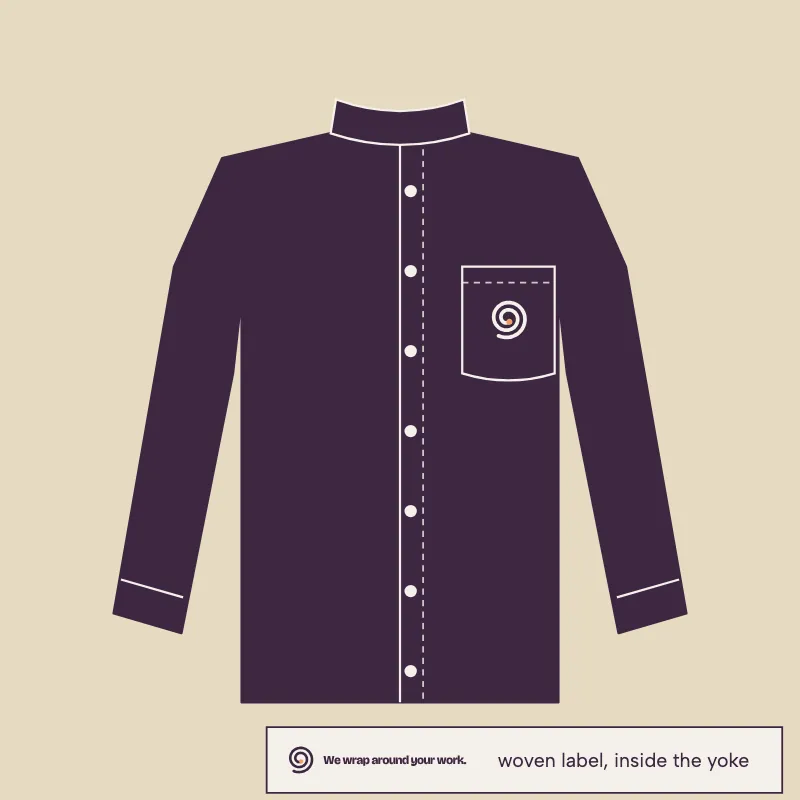
  • Flat sketch of a plum mandarin collar work shirt with the coil on the chest pocket
    Fig. 1Work shirtPlum · coil embroidered on the pocket · woven label inside the yoke
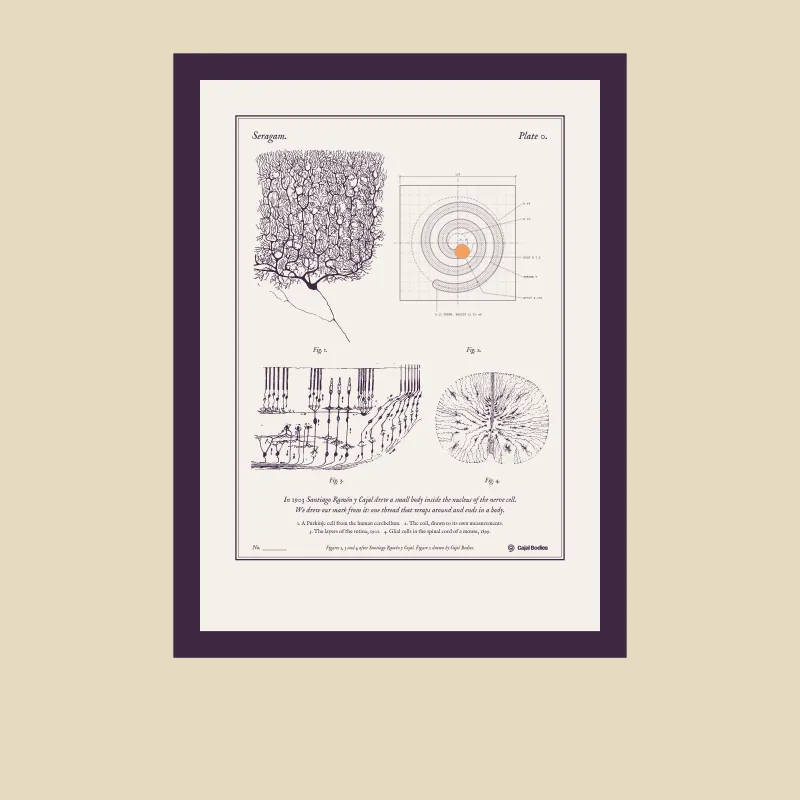
  • Plate 0 in a plum frame
    Fig. 2Plate 0Cotton rag paper · 30 × 40 cm · numbered by hand
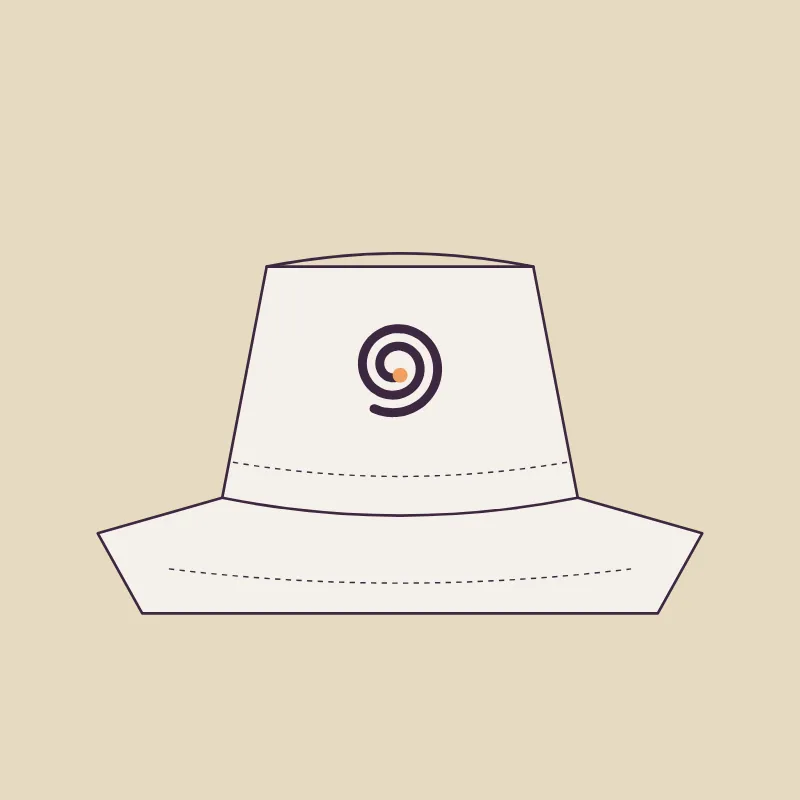
  • Flat sketch of a chalk bucket hat with the coil stitched on the front
    Fig. 3Bucket hatChalk twill · coil embroidered on the front

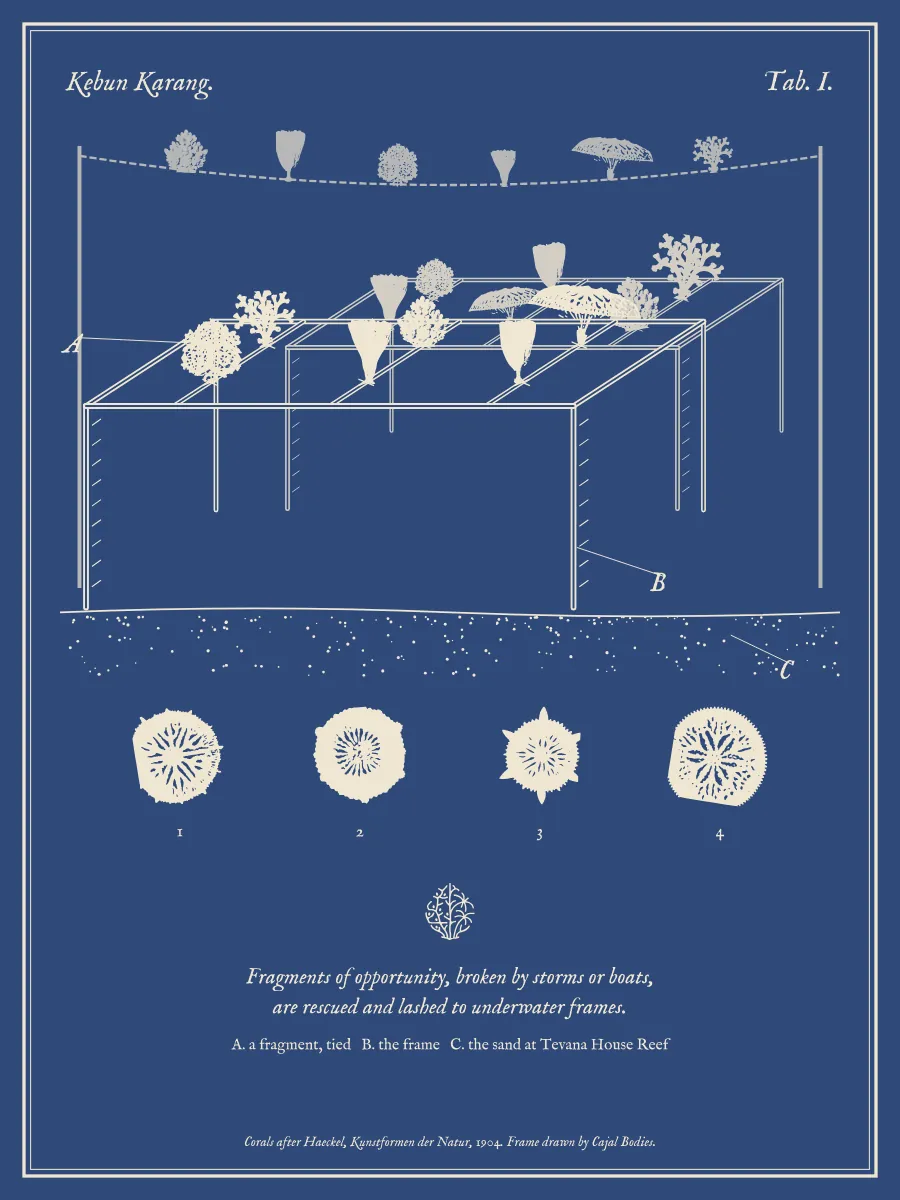
Tab. I of Kebun Karang: coral fragments tied onto nursery frames above the sand, drawn in cream on indigo
Tab. I, the nursery. Corals after Ernst Haeckel, Kunstformen der Natur, 1904. Frames drawn by Cajal Bodies.

Chapter 01

Kebun Karang

KIOSGaiaOne

The coral garden. Haeckel's corals from 1904 meet the nursery frames at Tevana House Reef, where GaiaOne's ocean gardeners tie fragments of coral back onto the reef.

A coral repeat for a camp shirt and a hat, the nursery rows in plan down a sun shirt and a long sleeve, and the plate tee in two cuts, its black version with a second screen of glow ink that lights Haeckel's siphonophores after dark.

For the water, a black rashguard with corals on the sleeves and a neck tube to match. For the boat, a cap with one coral embroidered. And small things to carry home: stickers, a key tag, and a sunscreen in a printed pouch.

Drop opening soonGet early access
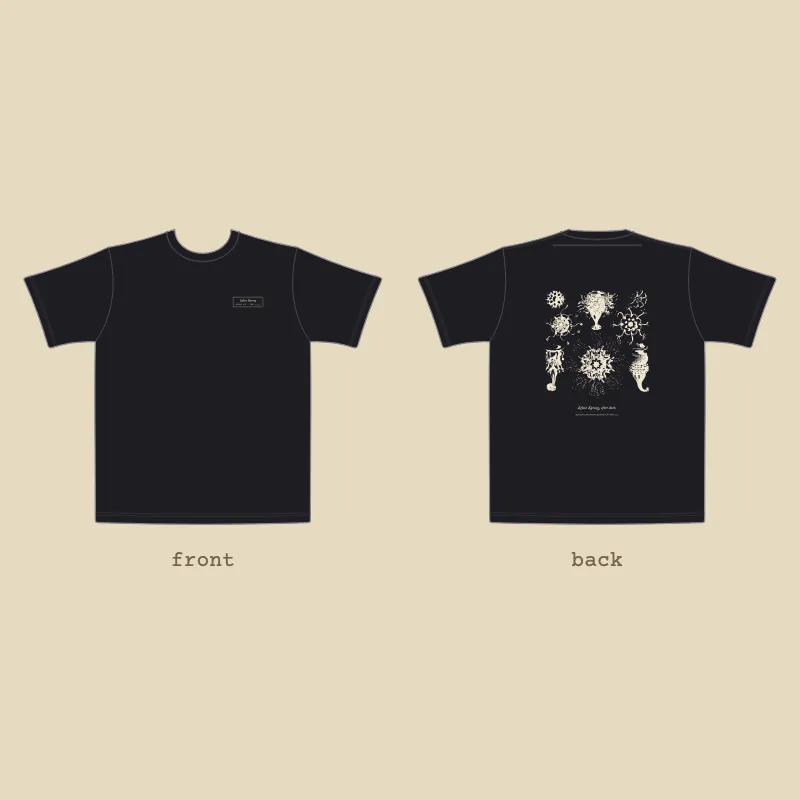
  • Flat sketch of a washed black tee: a small numbered mark on the front, Haeckel's siphonophores in cream on the back
    Fig. 1Plate teeWashed black or natural white · numbered · glow ink on black
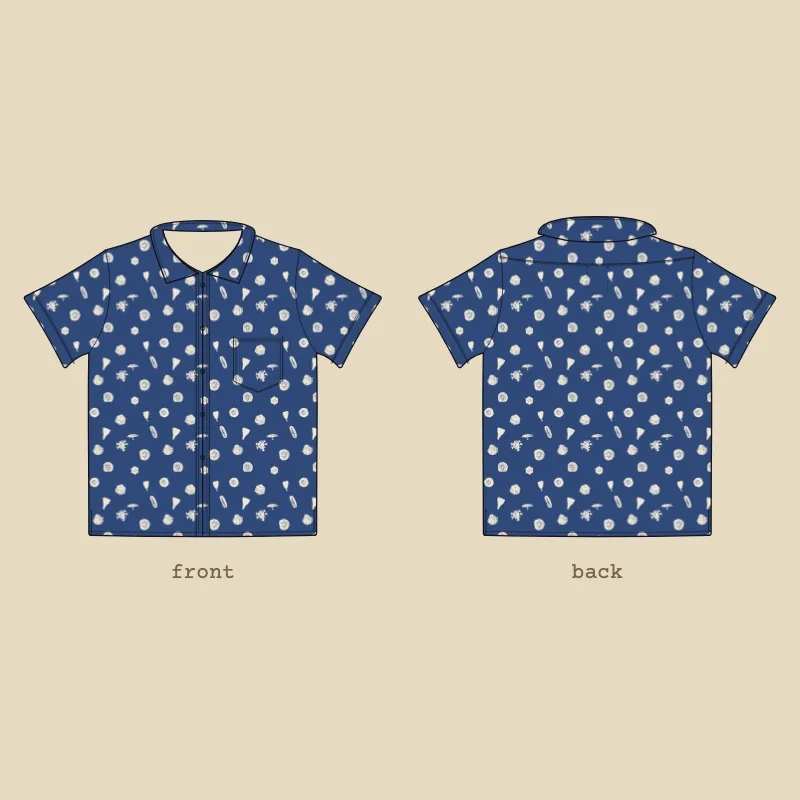
  • Flat sketch of a boxy camp-collar shirt covered in the coral repeat
    Fig. 2Camp-collar shirt1 screen, water-based · 40 cm repeat
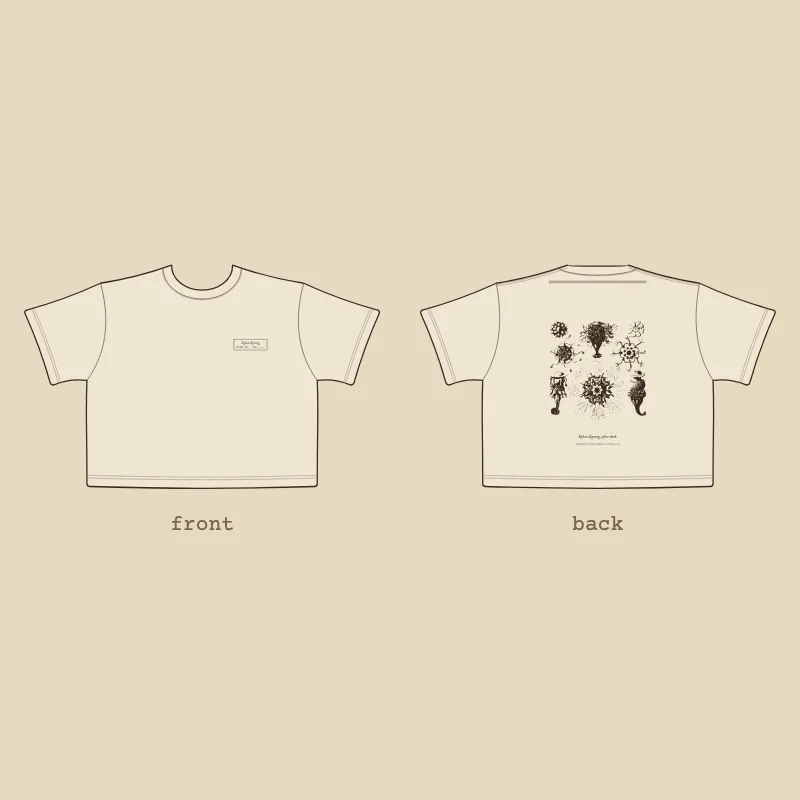
  • Flat sketch of a boxy cropped tee in natural white with the siphonophore plate in sepia on the back
    Fig. 3Plate tee, boxy cropBack print 26 × 30 cm · numbered
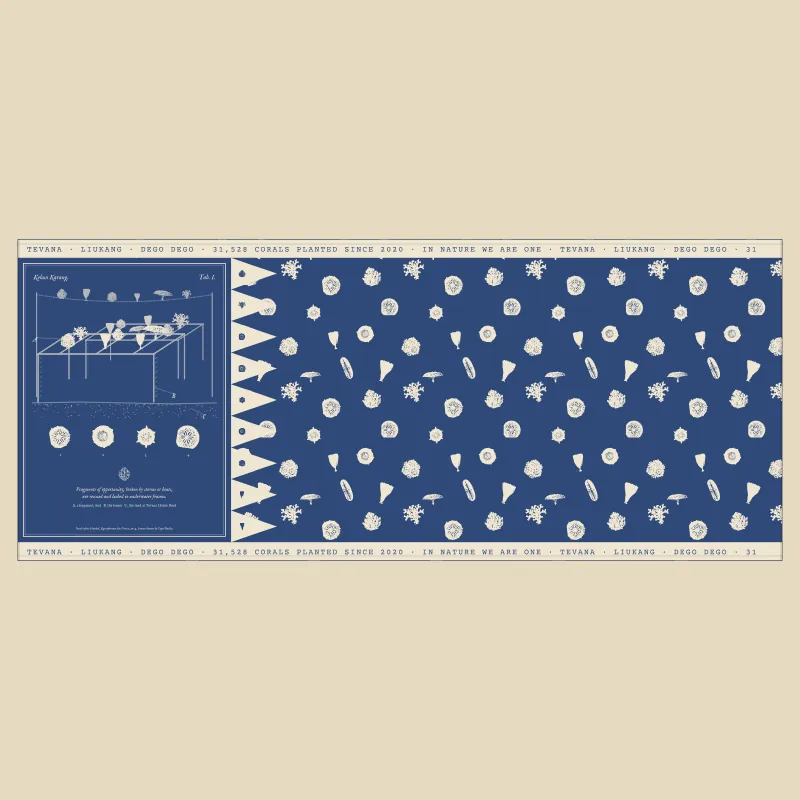
  • A kain panjang laid flat, with the plate as kepala and the coral repeat as badan
    Fig. 4Kain panjang105 × 250 cm · kepala, tumpal, badan, pinggir
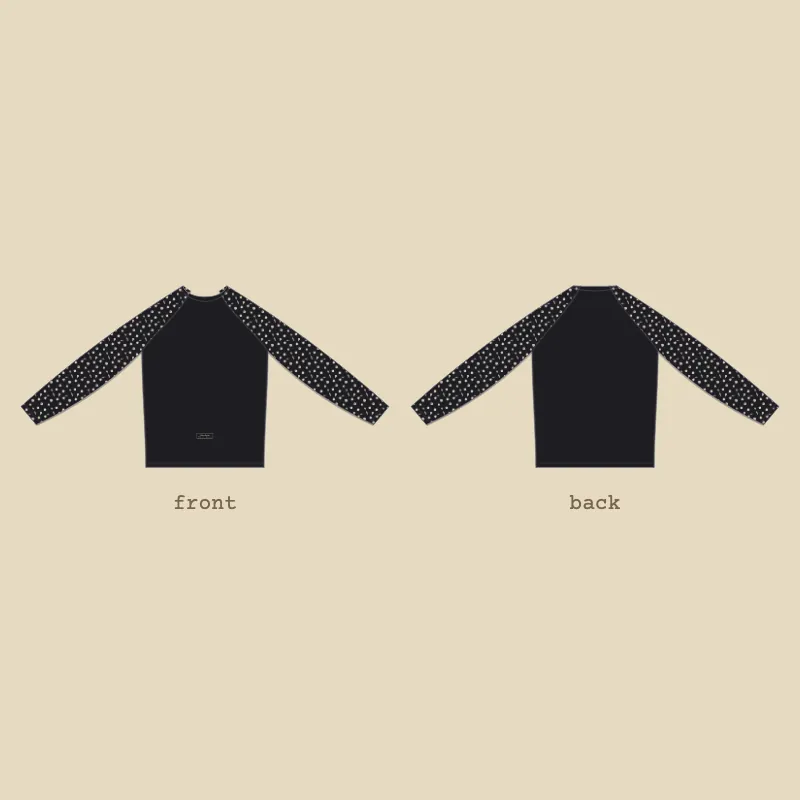
  • Flat sketch of a black long-sleeved rashguard with the coral repeat on both sleeves
    Fig. 5RashguardBlack · the coral repeat on the sleeves
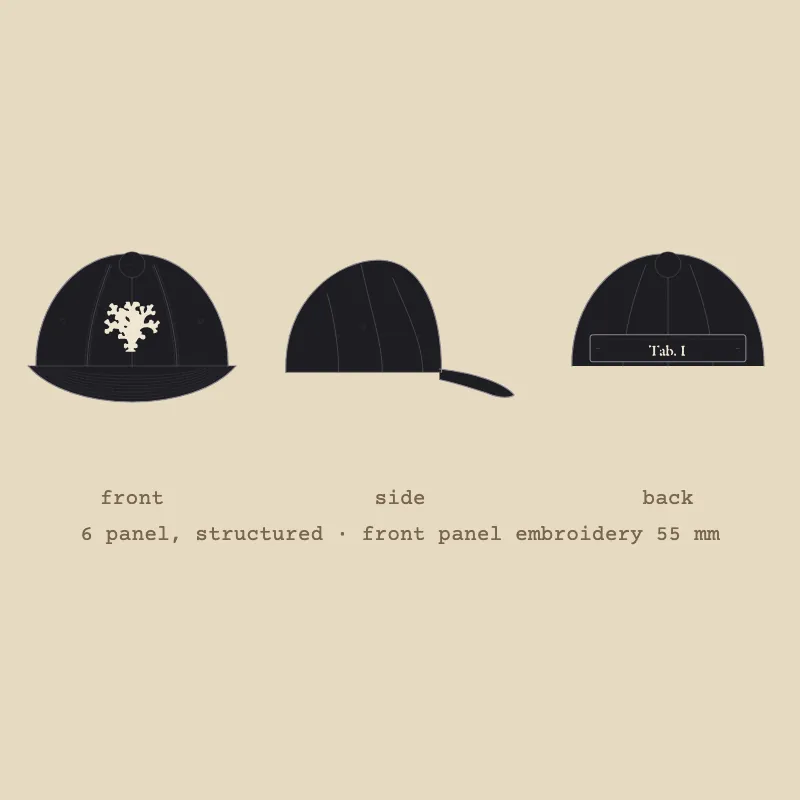
  • Flat sketch of a black cap with one coral from Tab. I embroidered in cream, and Tab. I on the back strap
    Fig. 6CapEmbroidered · one coral from Tab. I
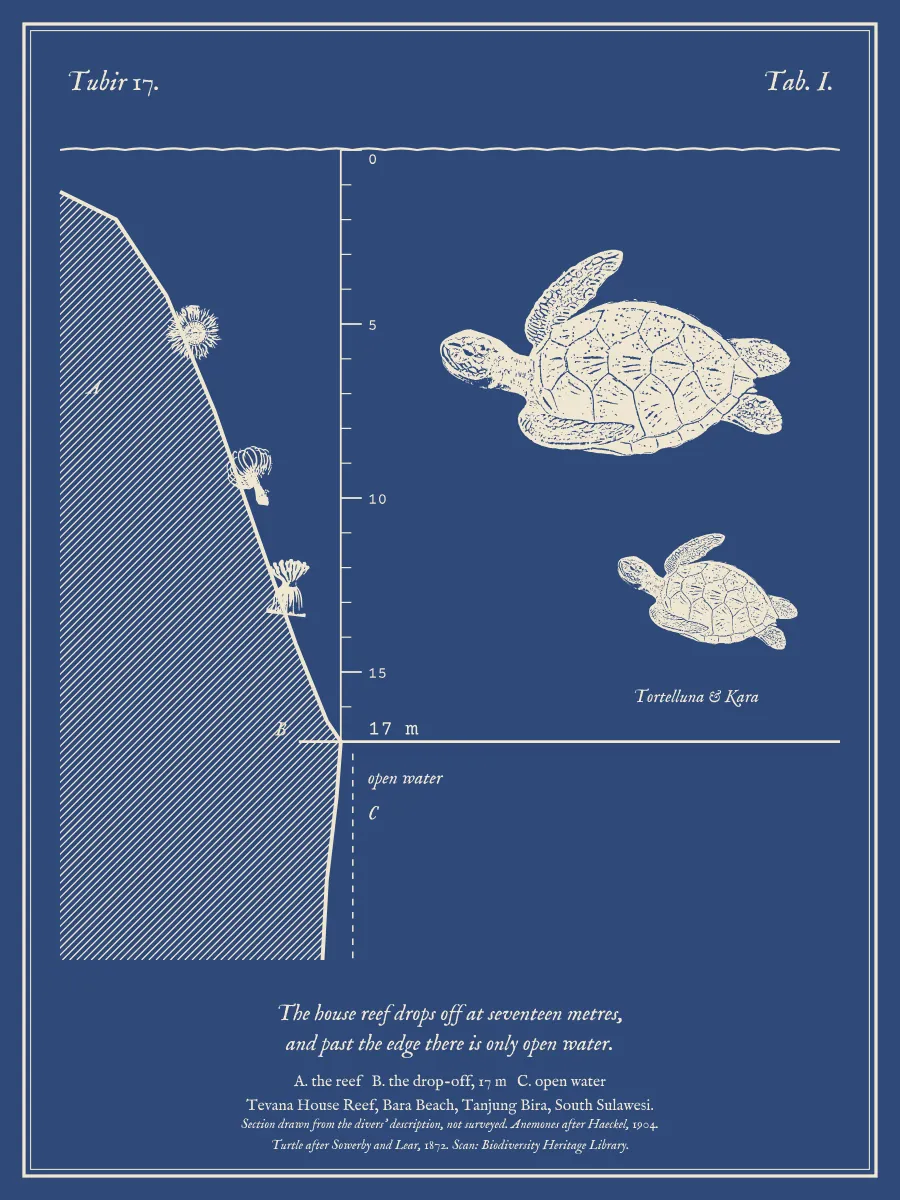
Tab. I of Tubir 17: the house reef in section, dropping off at seventeen metres, with two turtles in the open water
Tab. I, the house reef in section. Turtles after Sowerby and Lear, 1872. Section drawn by Cajal Bodies.

Chapter 02

Tubir 17

KIOSTEVANA HOUSE REEF

Tubir is what Indonesian divers call the place where a reef drops off. At Tevana House Reef on Bara Beach it comes at seventeen metres, and past it there is open water.

This chapter draws that edge like a sounding on an old chart, with Sowerby and Lear's turtles of 1872 for Tortelluna and Kara, who live on the reef, and Haeckel's anemones for the cloth. Made for the dive school and the retreats.

Drop opening soonGet early access
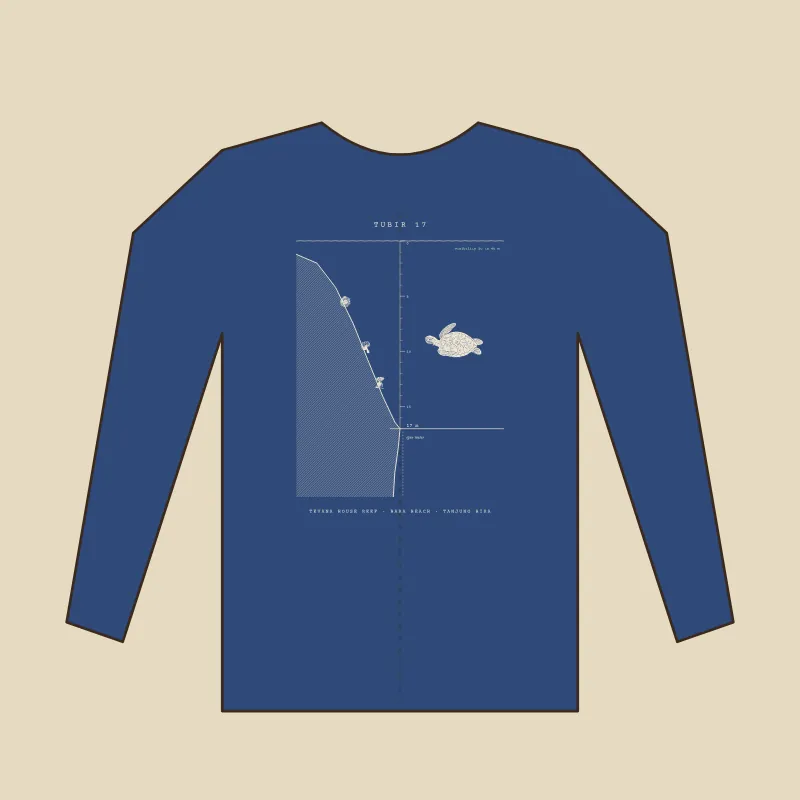
  • Flat sketch of a freedive sun shirt with a depth ruler from the surface to 17 metres down the spine
    Fig. 1Freedive sun shirtBack print 32 × 44 cm · 0 to 17 m
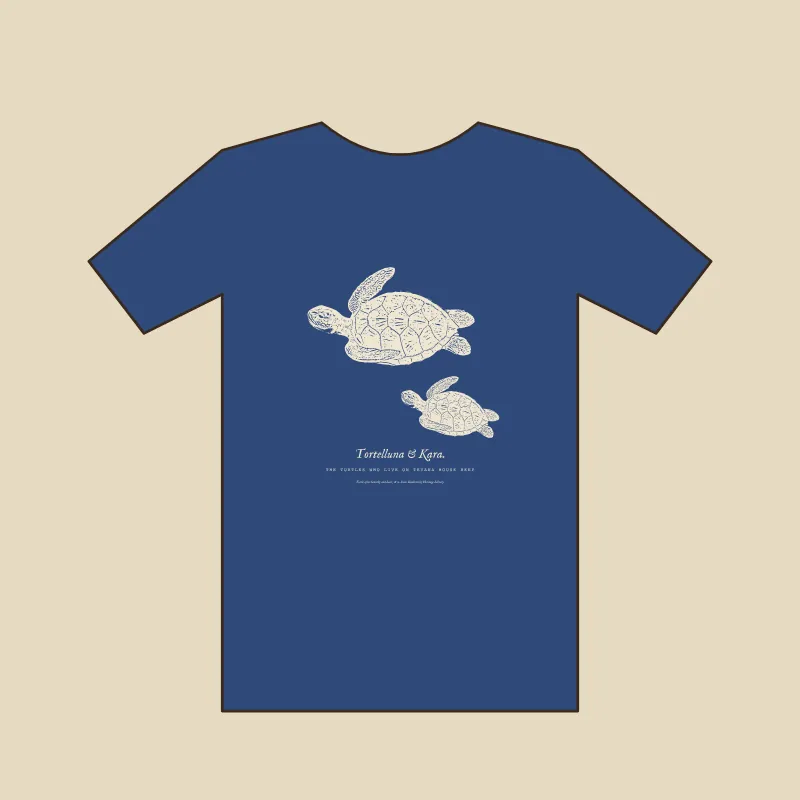
  • Flat sketch of a tee with two woodcut turtles captioned Tortelluna and Kara
    Fig. 2Tortelluna and KaraFront print 30 × 36 cm
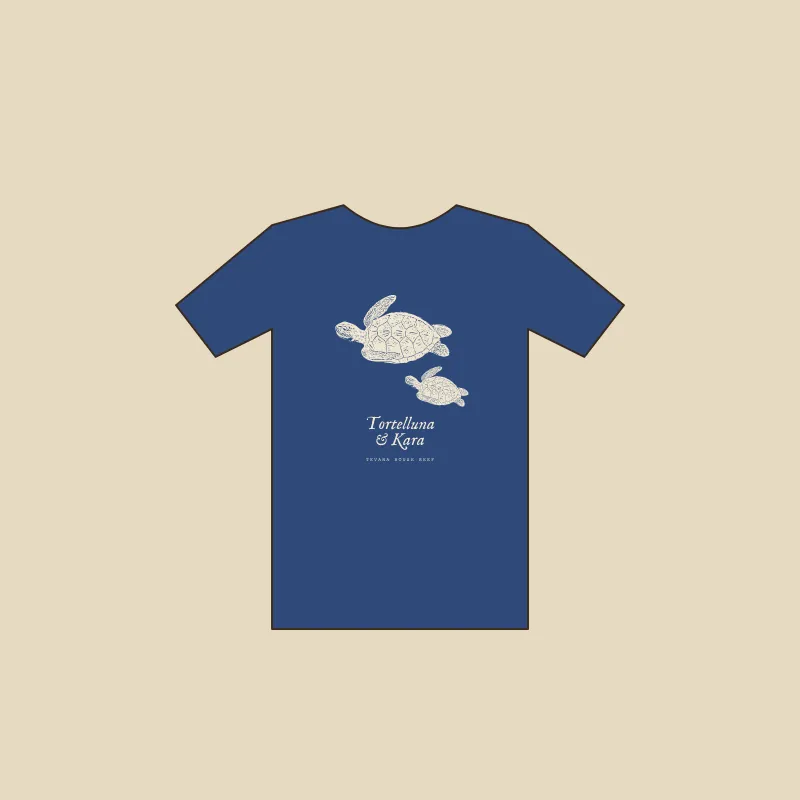
  • Flat sketch of a small kids tee with the two turtles and their names set large
    Fig. 3Tortelluna and Kara, kidsFront print 20 × 24 cm
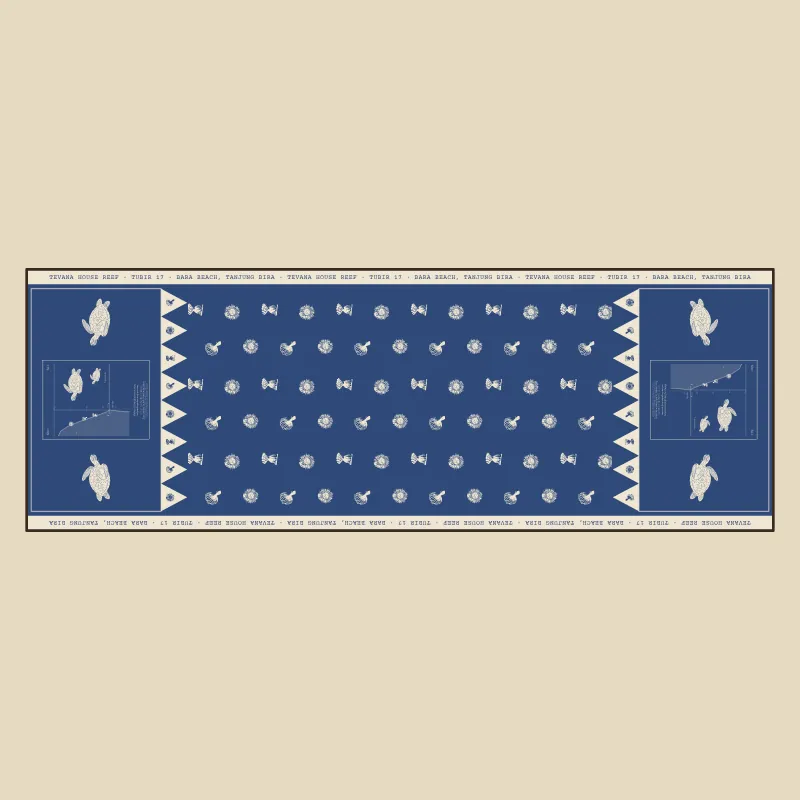
  • A selendang laid flat, the plate at both ends and anemones through the middle
    Fig. 4Selendang retreat wrap70 × 200 cm · kepala at both ends
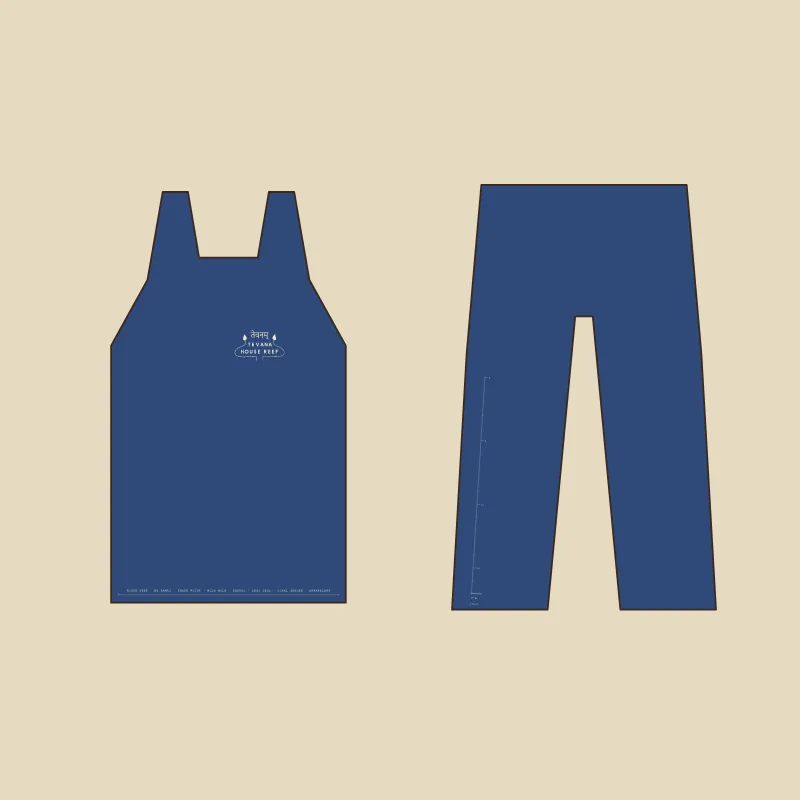
  • Flat sketch of a tank and drawstring pant with small prints at the hem and down the leg
    Fig. 5Retreat setTank and drawstring pant · two small prints
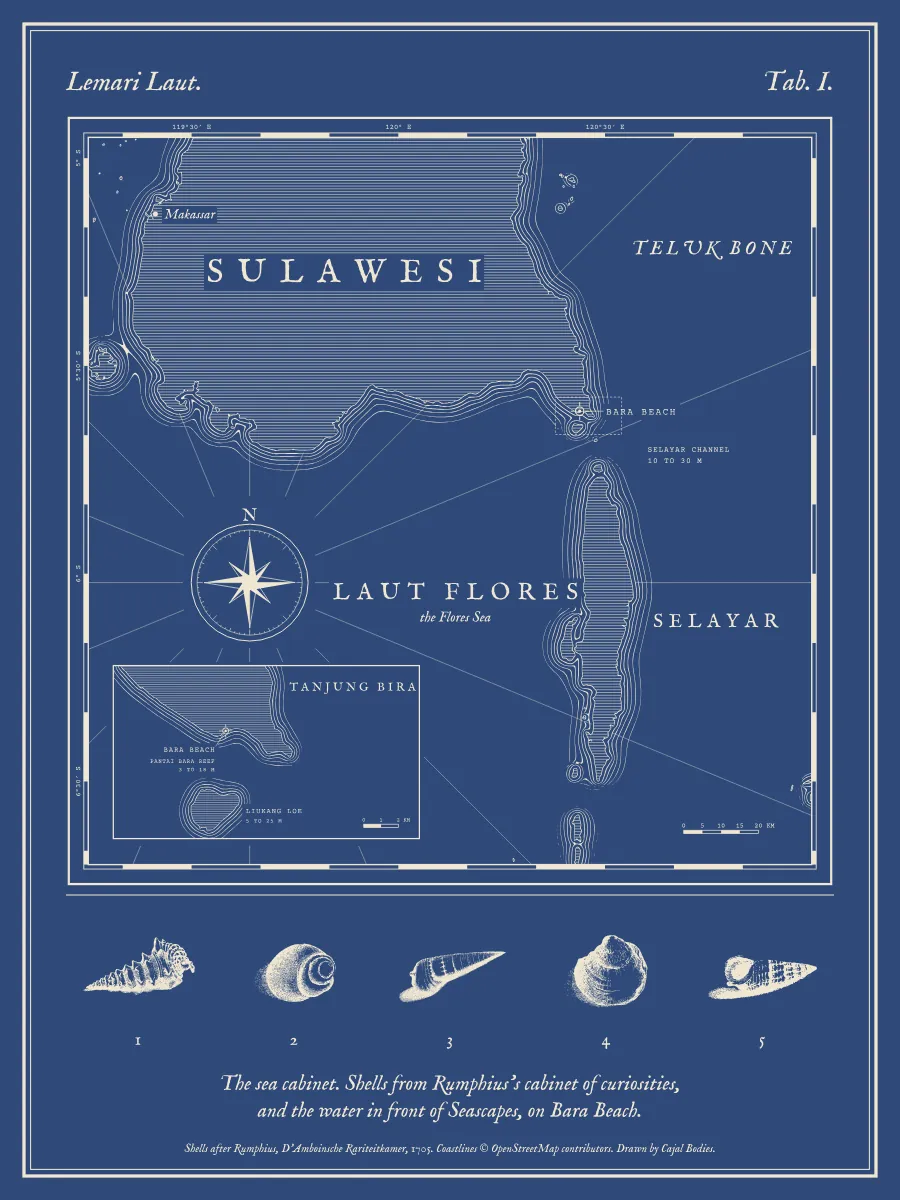
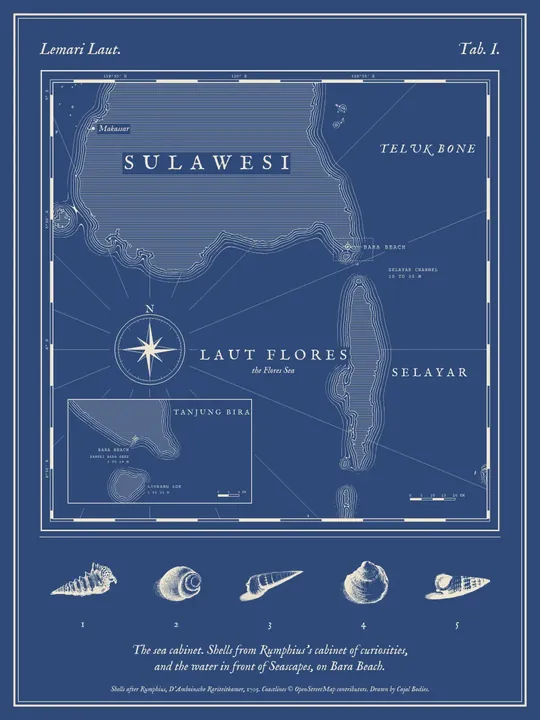
Tab. I of Lemari Laut: an old style sea chart of the Flores Sea from Makassar to Selayar with five shells
Tab. I, the Flores Sea. Shells after Rumphius, 1705. Coastlines © OpenStreetMap contributors.

Chapter 03

Lemari Laut

KIOS

The sea cabinet. In 1705 Rumphius laid out the shells and crabs of the islands like a cabinet of curiosities. This chapter opens that cabinet on Bara Beach.

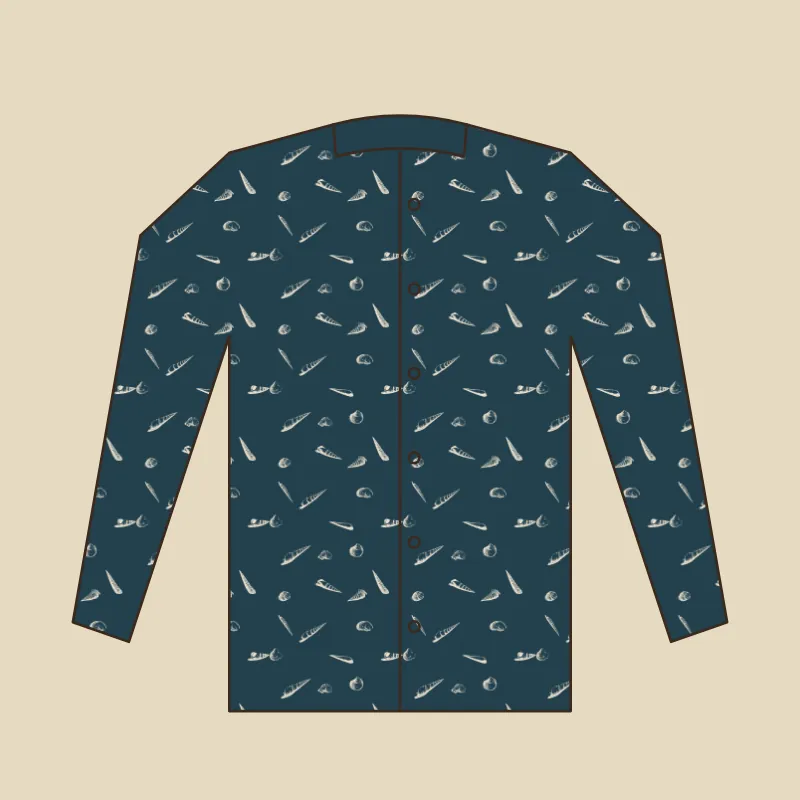
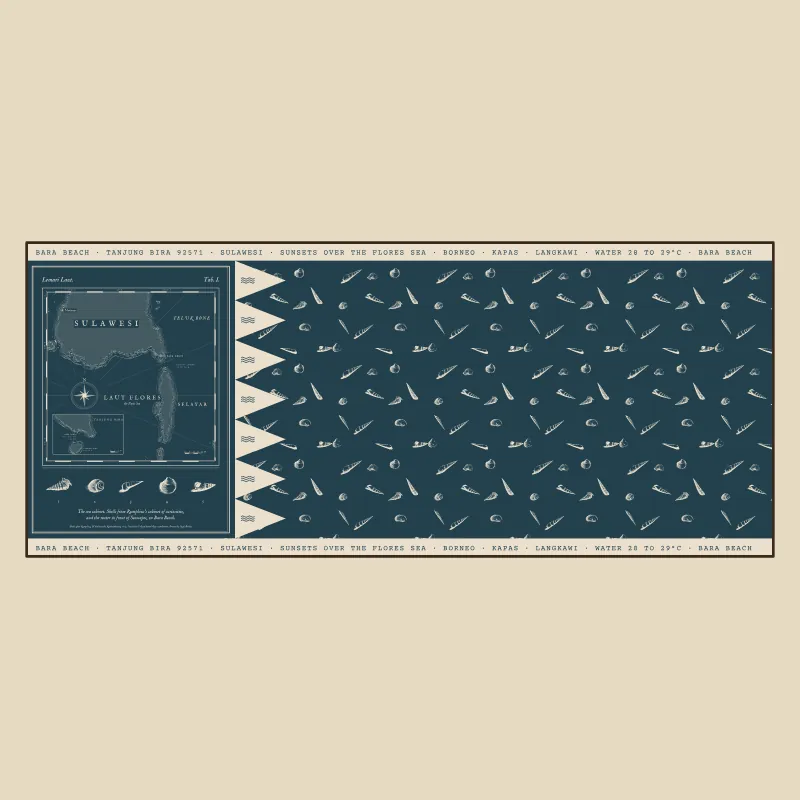
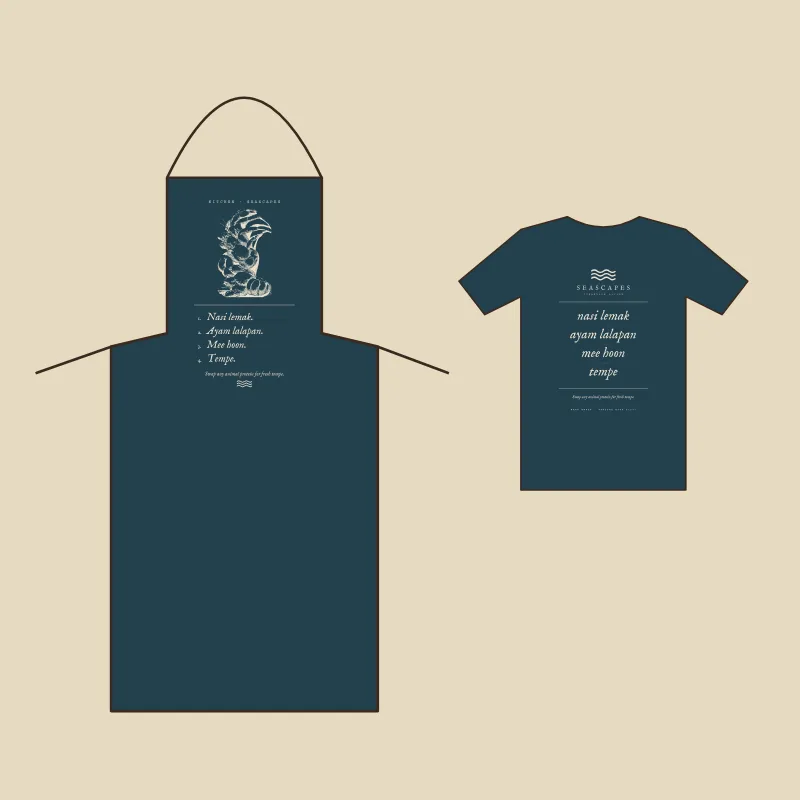
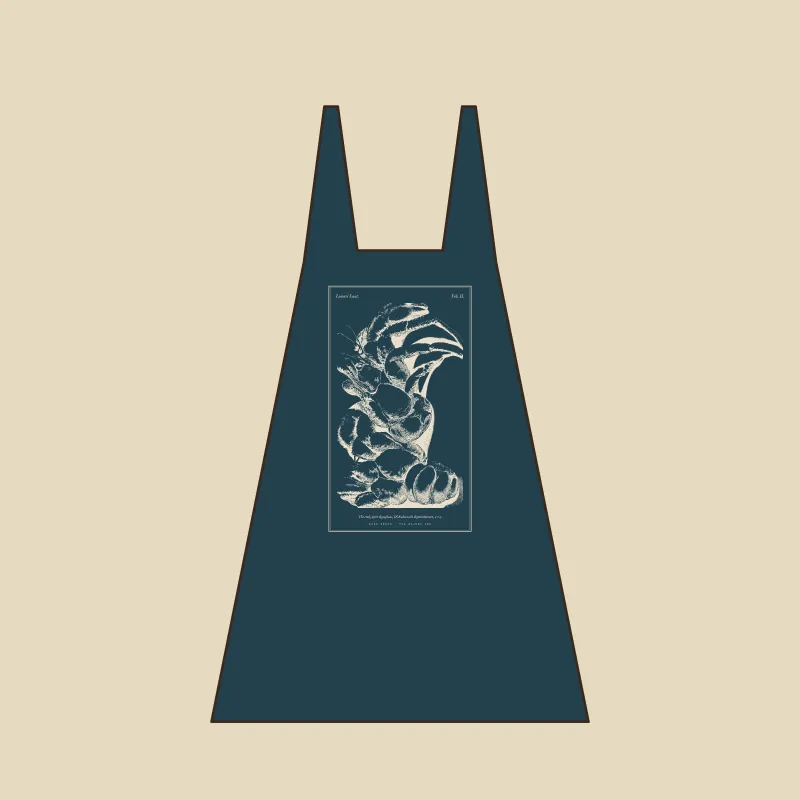
His shells for a dinner shirt, his crab on a slip dress, the waters in front of Seascapes drawn as an old sea chart, and the kitchen's own words on the apron: nasi lemak, ayam lalapan, mee hoon, tempe.

Drop opening soonGet early access
  • Flat sketch of a mandarin collar shirt covered in Rumphius's shells
    Fig. 1Mandarin-collar dinner shirt1 screen, water-based · 32 cm repeat
  • A kain panjang laid flat, with the sea chart as kepala and shells as badan
    Fig. 2Sunset kain panjang105 × 250 cm · the chart as kepala
  • Flat sketch of a kitchen apron and a staff tee, each with Rumphius's crab over the names of dishes
    Fig. 3Kitchen apron and staff teeThe crab over the kitchen's own words
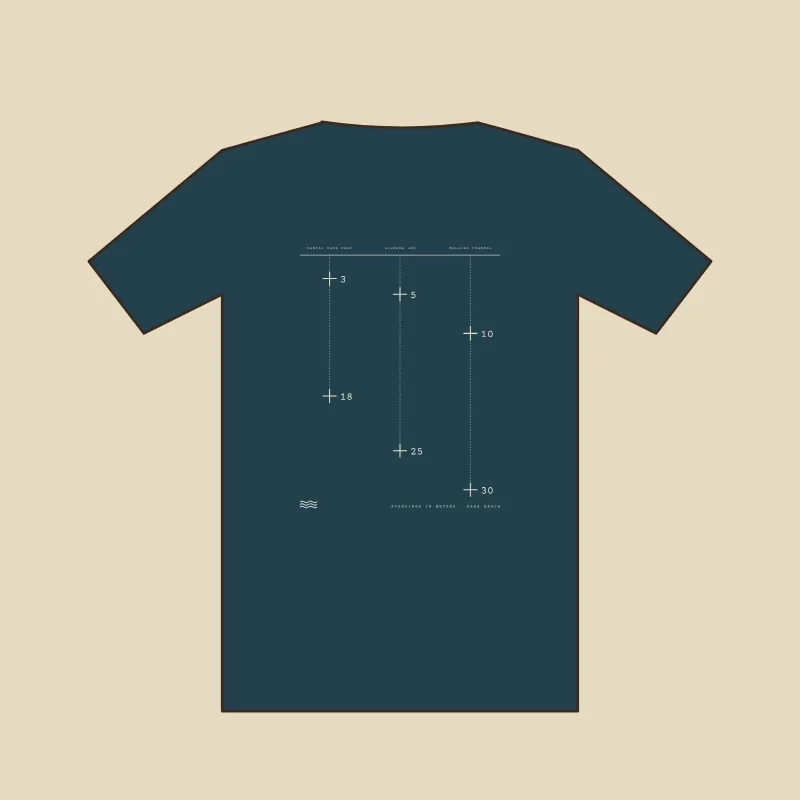
  • Flat sketch of a tee with a sounding line marking three dive sites at their depths
    Fig. 4Soundings tee1 screen · three dive sites, true depths
  • Back view sketch of a slip dress with Rumphius's crab in a narrow engraved frame
    Fig. 5Slip dressBack print 26 × 44 cm
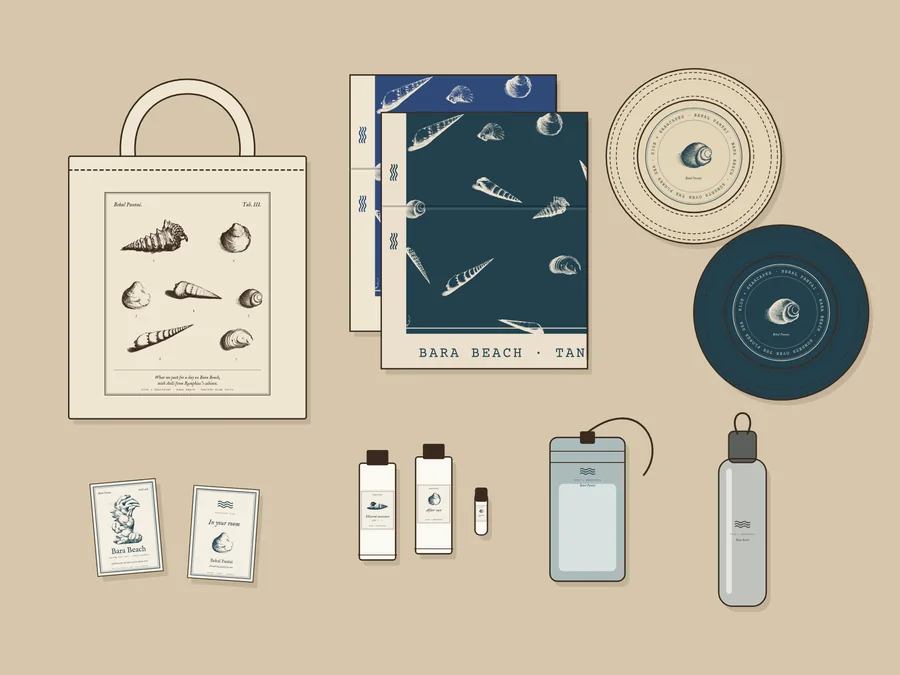
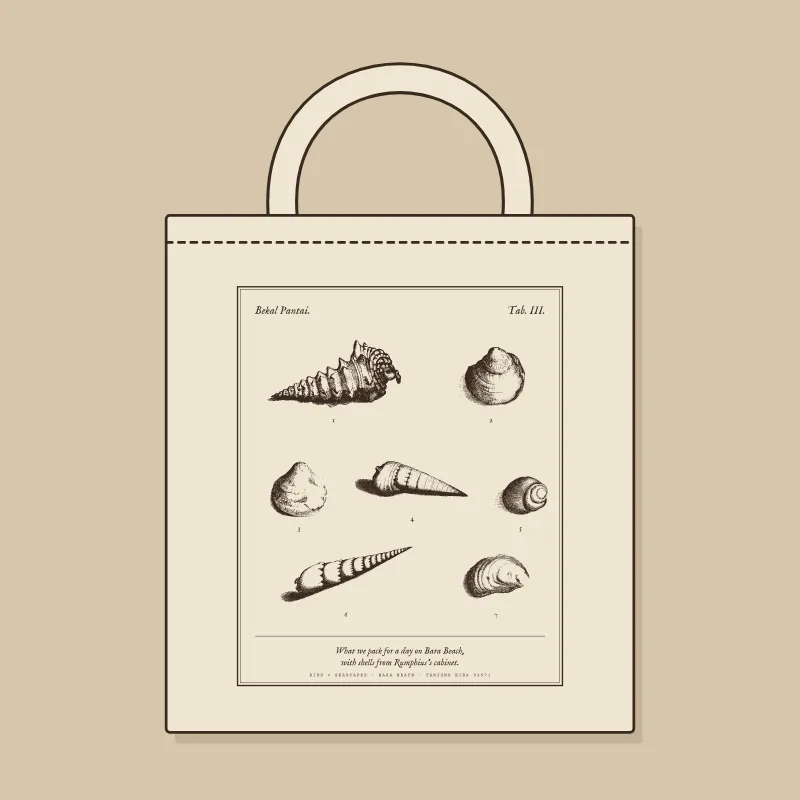
The Bekal Pantai kit laid out flat for two: a tote printed with Rumphius's shells, two folded pareos, two bucket hats, a dry pouch, a refill bottle, sunscreen, after-sun, lip balm and two cards
The kit for two, laid flat. Shells after Rumphius, 1705. Drawn by Cajal Bodies.

Chapter 03, the beach kit

Bekal Pantai

KIOS

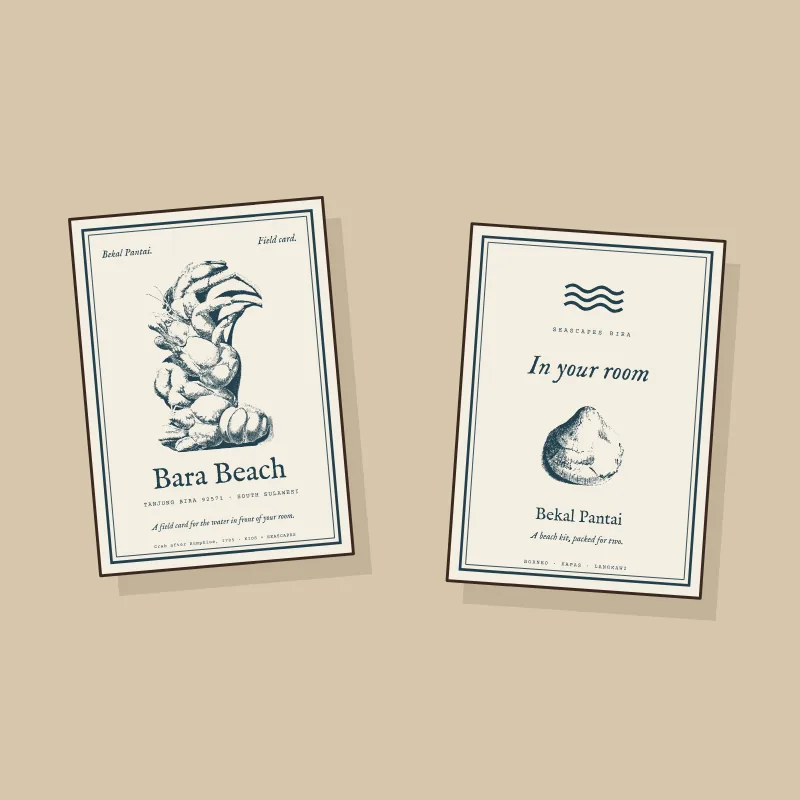
Bekal is what you pack for a trip. In every room at Seascapes Bira there is one waiting for the two of you: a tote printed with Rumphius's shells, two pareos, two bucket hats, a dry pouch, a bottle to refill, sunscreen, after-sun and lip balm, and a field card for the water in front of your room.

Use it all while you stay. If you would like to take one home, ask at reception for a sealed kit. The textile set (the tote, the pareos and the hats) ships worldwide.

In every room at Seascapes BiraGet early access
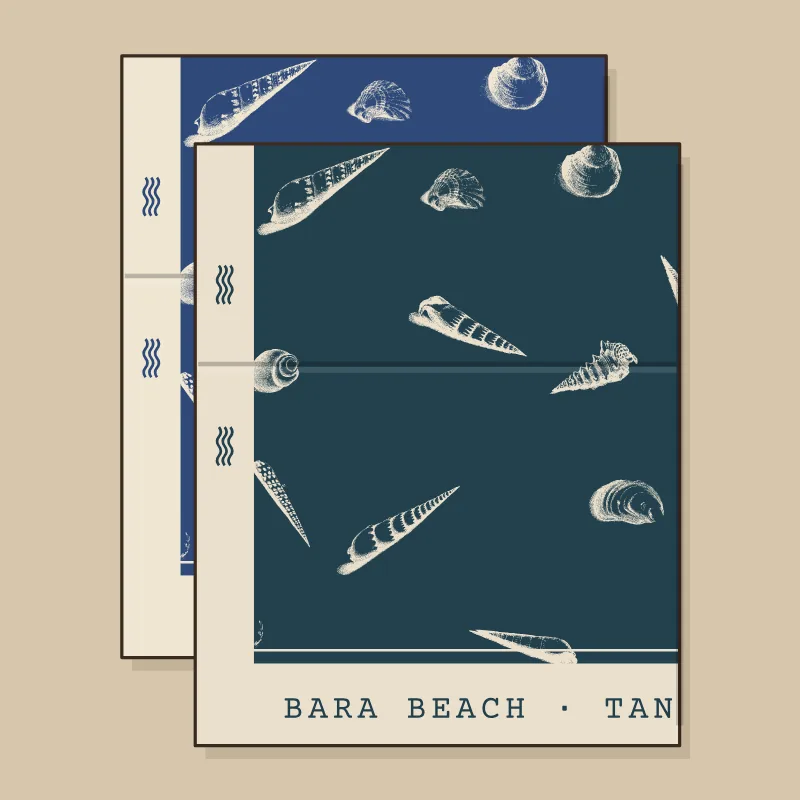
  • Two folded pareos in the Lemari Laut shell repeat, night teal and indigo, with the place names along the edge
    Fig. 1Two pareos110 × 180 cm · a sarong, a beach sheet, a boat scarf
  • A canvas tote printed with a plate of seven numbered shells
    Fig. 2The toteTab. III · the kit packs inside it
  • Two bucket hats seen from above, a shell in each crown
    Fig. 3Two bucket hatsOne each · a shell in the crown
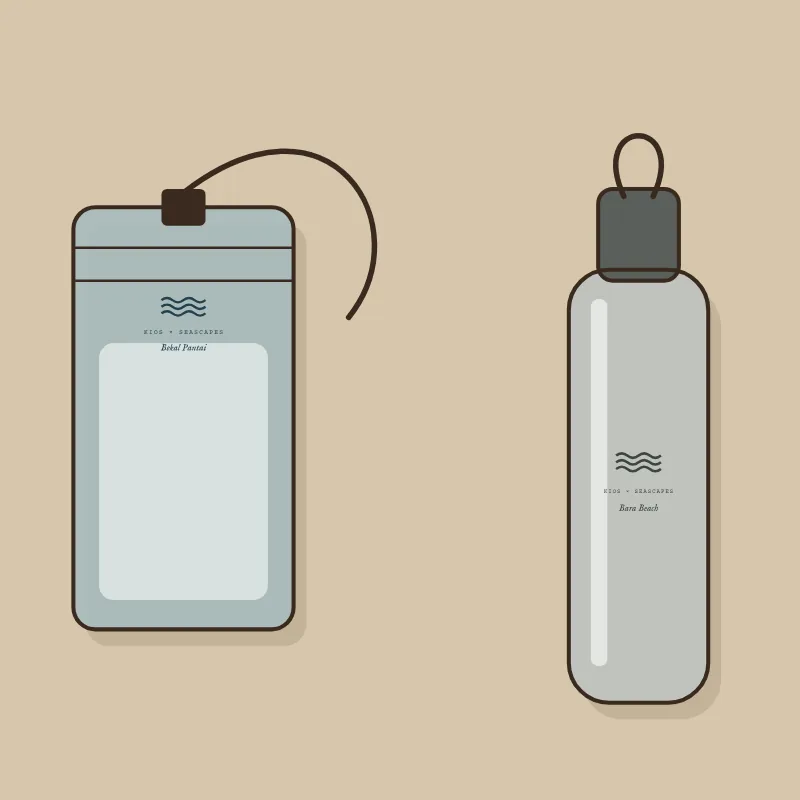
  • A clear phone dry pouch and a refill bottle, each with the three waves
    Fig. 4Dry pouch and bottleFor the boat and the beach
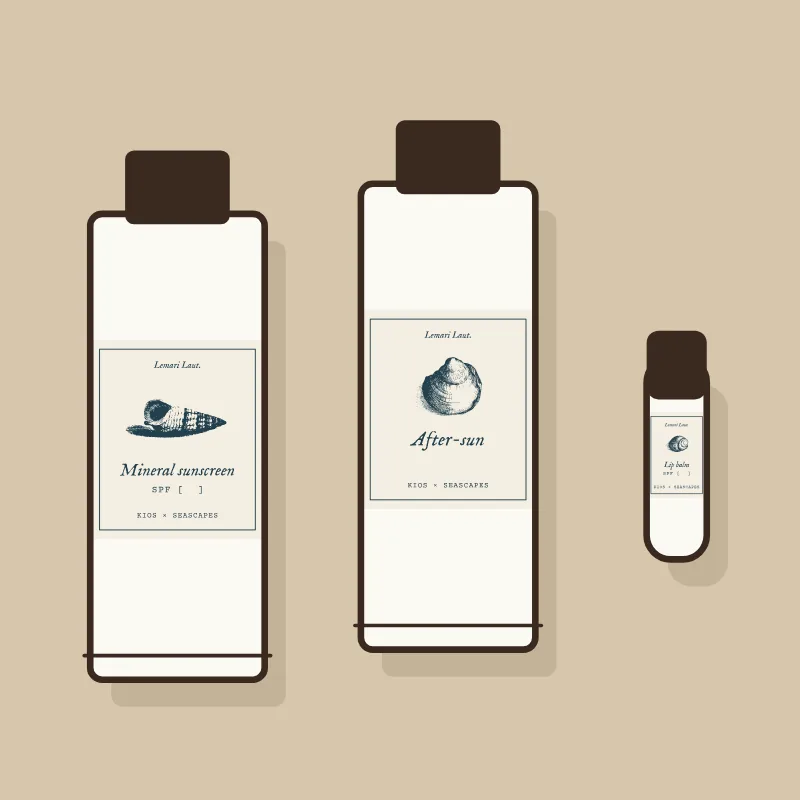
  • Sunscreen, after-sun and lip balm in paper sleeves printed with shells
    Fig. 5Sunscreen, after-sun, lip balmMineral sunscreen with non-nano zinc oxide
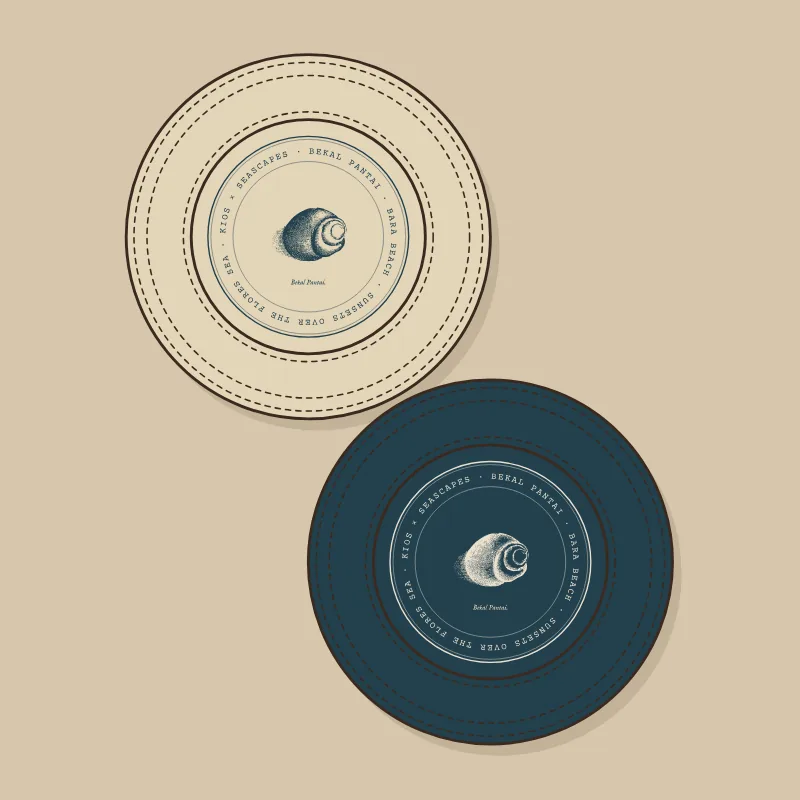
  • The Bara Beach field card with Rumphius's crab, and the In your room card
    Fig. 6Two cardsBara Beach, and what the kit is
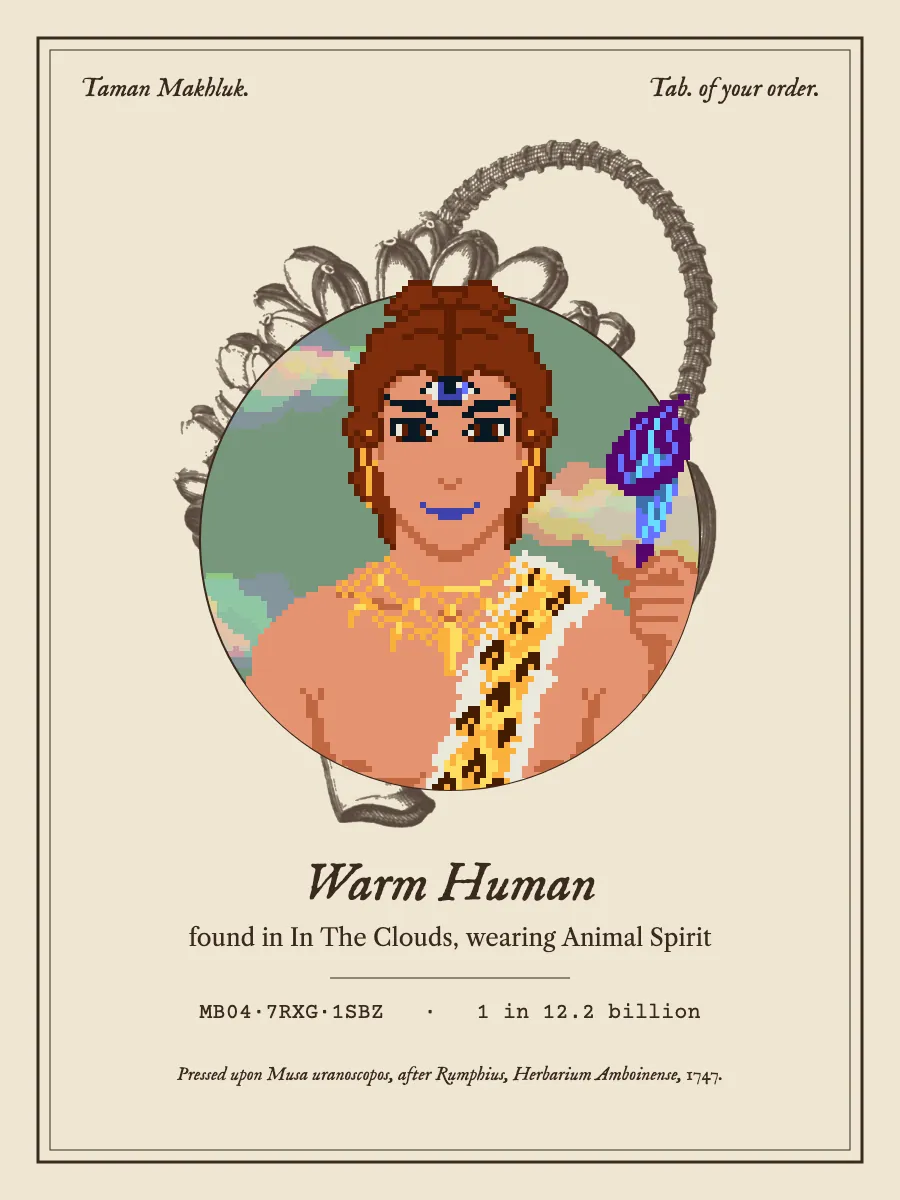
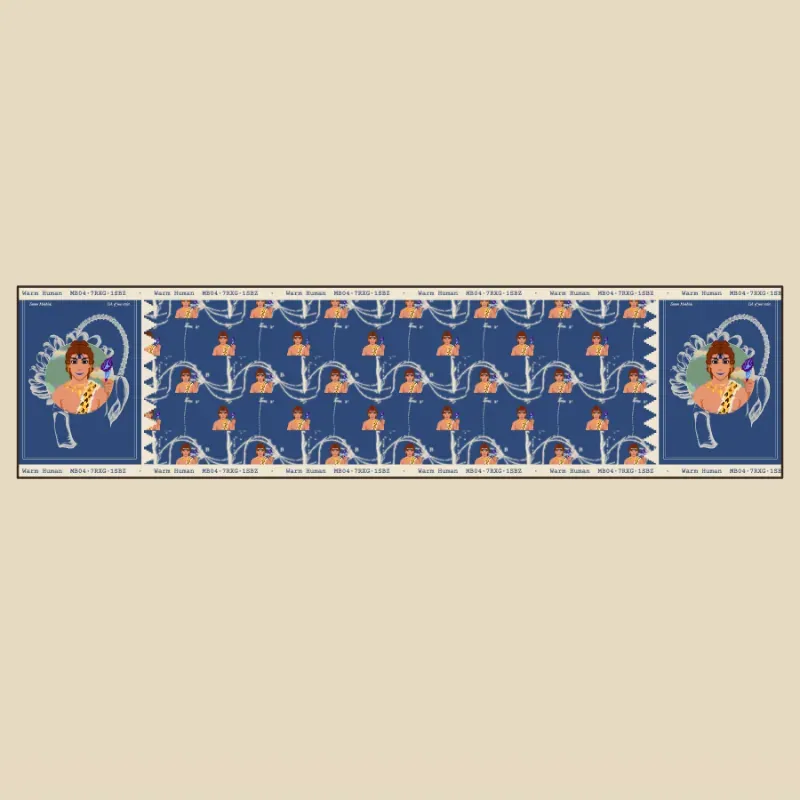
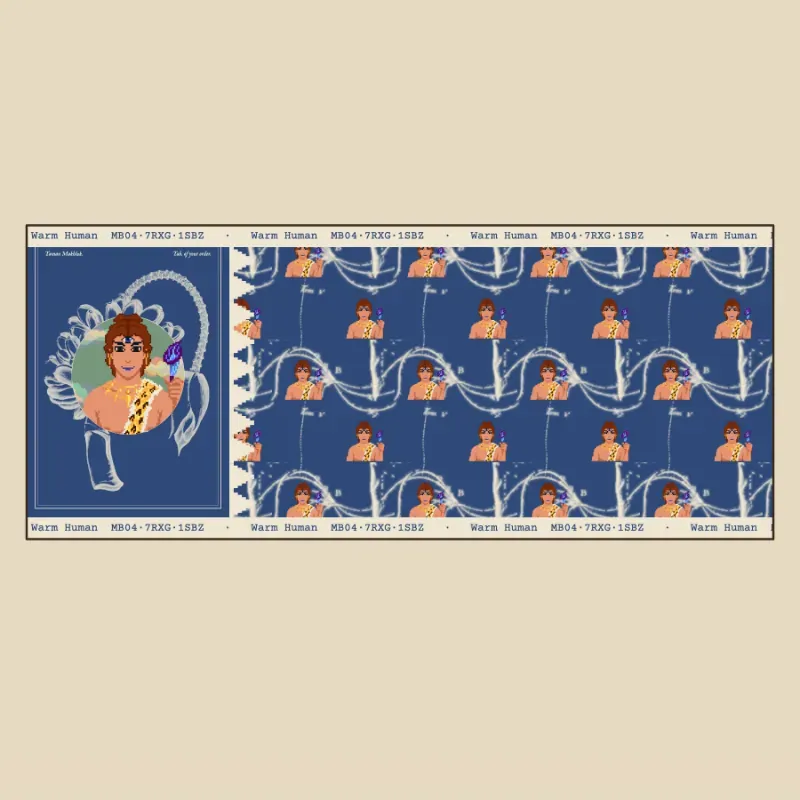
Specimen plate of Warm Human, a pixel creature from the Mythical Beings kit, pressed among engraved banana leaves
Warm Human, one specimen of many, pressed upon Musa uranoscopus after Rumphius, Herbarium Amboinense, 1747.

Chapter 04

Taman Makhluk

KIOSMythical Beings

The garden of beings. Every creature comes from the original Mythical Beings kit and is pressed into a plate among the plants of the old herbals of the archipelago.

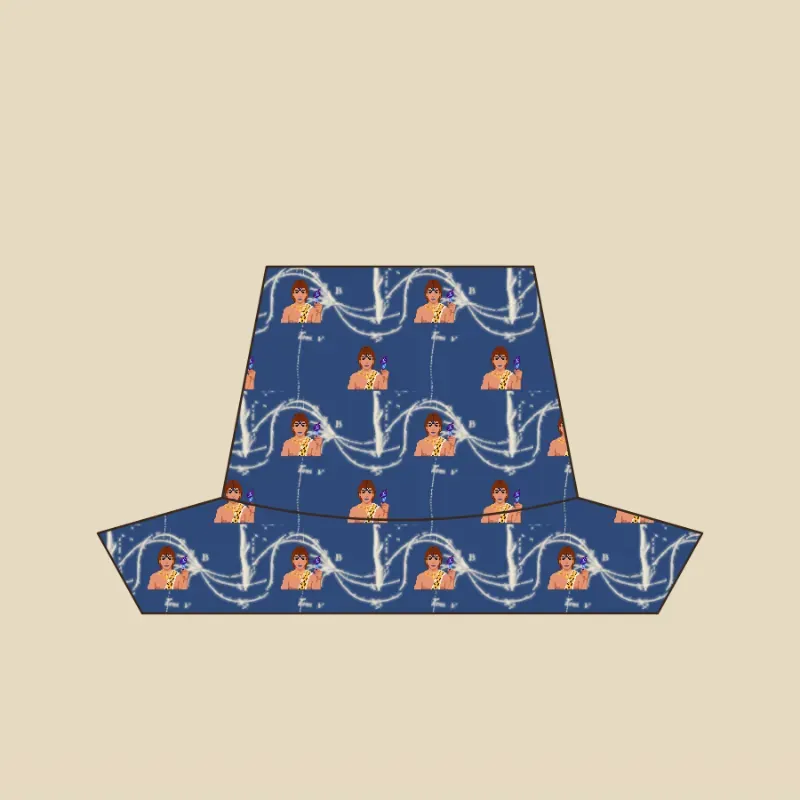
Summon a specimen, keep the characters you love, and the plate you choose is printed for you alone. Ganesha and Hanuman are printed on the pieces worn on the upper body: the shirts, the selendang and the hat.

Drop opening soonGet early access
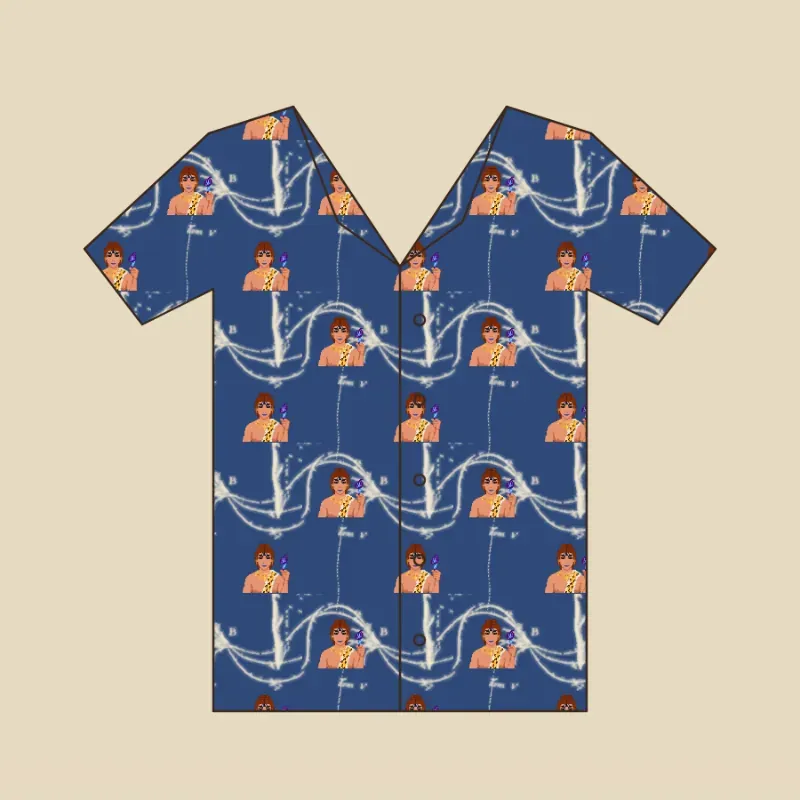
  • Flat sketch of a camp-collar shirt in a repeat of small specimens among plants
    Fig. 1Camp-collar shirtThe pesisir repeat, dropped half a step
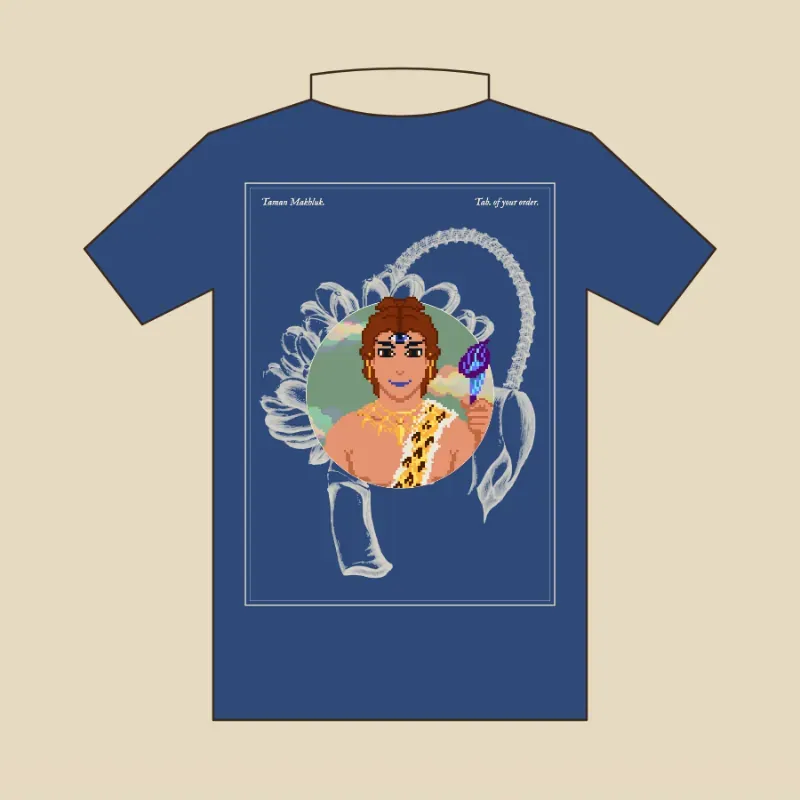
  • Flat sketch of a mandarin collar shirt with the specimen plate printed large across the back
    Fig. 2Mandarin-collar shirtFrog closures · the plate across the back
  • A selendang laid flat with the specimen plate at each end
    Fig. 3SelendangThe plate at each end, the name along the pinggir
  • A kain panjang laid flat like batik, with the plate as kepala and a stepped tumpal
    Fig. 4Kain panjang105 × 250 cm · laid out like batik
  • Flat sketch of a reversible bucket hat in the specimen repeat
    Fig. 5Bucket hatReversible · a small plate inside the crown
The drop

How a drop works

Nothing is printed before it is ordered. Each chapter sells in one window, and every piece in that window is made for the person who ordered it.

  1. The window opens

    A chapter opens for pre-order, and the ship-by date is on the page before you order.

  2. Partners first

    The partner's community, the divers, guests and crew around it, get the first 48 hours.

  3. Printed to order

    When the window closes, the chapter goes to print. Edition numbers follow the order in which pieces were ordered.

  4. Shipped by the date

    Your piece leaves by the ship-by date we promised, to wherever you are in the world.

Made to order. Printed with water-based ink.Worldwide shipping